Monday, 11 February 2013

TASK 2


Assignment 2

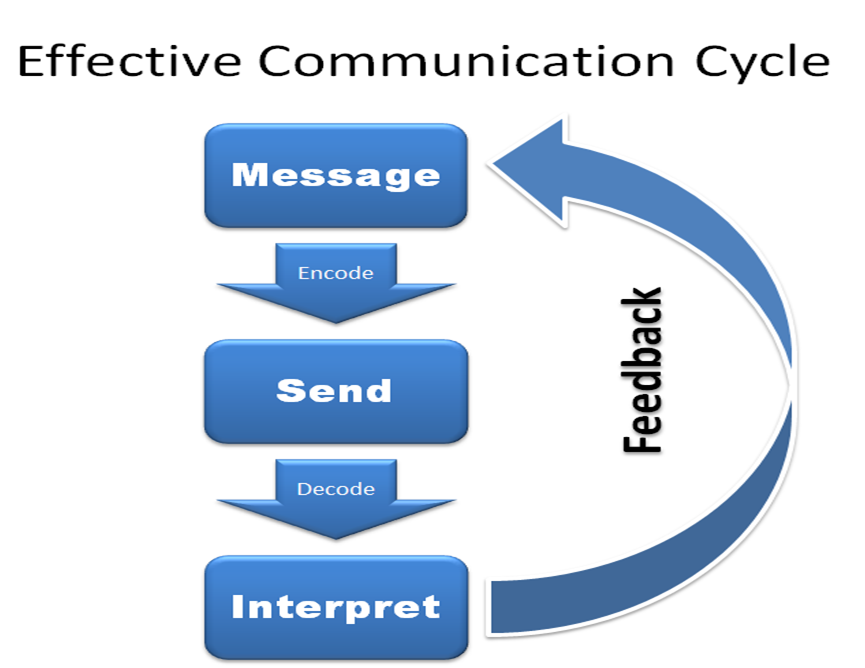
Definition of effective communication
“A two way information sharing process which involves one party sending a message that is easily understood by the receiving party. Effective communication by business managers facilitates information sharing between company employees and can substantially contribute to its commercial success.”(www.businessdictionary.com)


  Message- you must first decide what message you wish to send.
Encode- you must decide how you wish to send the message e.g. verbally, facial expression ECT...
Send-you must physically send the message
Decode- the other person must decode the message when they have received it
Interpret- the other person must make sense of the message
Feedback – you will receive feedback in one form or the other
If any step was to fails which it may do quite often it could lead to confusion or frustration.
General communication skills
Communication processes need an audience to communicate the message to. The success of the message will be determined by:
Cultural differences
Adapting to suit an audience
Accuracy
Engaging the audience


Cultural differences
If there are any cultural differences between the speaker and there audiences it will need to be addressed in a delicate and careful manor.  Some gestures or words which you consider to be harmless may come across as offensive or inappropriate in another language, to combat this you will need to stick to plain English without any slang words and you will need to make sure your gestures are not offending anyone. You may need to research to see if there is anything that should not be mentioned in to a particular group of people.

Adapting to suit an audience
There are some things like age or composition of an audience which may affect the way you communicate with them. In some case you may need to rays your voice or vary the tone of your voice to help maintain interest. You may need to use terminology to relate to the audience to make sure that they understand. You might present your message in a particular format for example, music, rhyme ECT...
16

Interpersonal skills:

Communication consists of two or more people. Generally one person will express a message through words or in righting but this is not always the case there are some circumstances where you rely heavily on body language. The other person will use there senses to help them to understand what the other person is trying to say.  These consist of things like:

Speed of response
Type of question
Barriers of communication
Active engagement
Positive communication
Negative language


Positive and negative language

It is important to portray a positive attitude when talking to people this can be done through the language you use or your body language. Nodding your head shows that you are listening and are taking in what is being said and agreeing with certain points are good ways of showing that your are listening. Negative language should be avoided as best possible because they are rude and show that you are not talking in what is being said. Negative language consists of things like disregarding what was said or not responding appropriately to questions or finishing people’s sentences. Body language can also have a negative effect, things like leaning on your hand or looking away show that you are not listening and should be avoided. 


Active engagement
Communication consists of more thank just the spoken language; you can communicate to others while they are speaking. This is done by reacting to what is said by using gestures or facial expressions. Doing this shows that you have heard what they have said and understand it. Usually when someone has finished speaking they will be waiting for a response, they can show this by nodding in your direction or saying things like “right?” or “do you agree?”You can show that you understand that they want you to make a response by quickly summarizing it before moving on or you could give some examples to back up what was said. It is important to show that you understand what the other person wants or they may become confused or it can cause communication problems.


Communication in writing:
Writing communication is different than any other type of communication, it takes skills that not everyone has and it requires much more thought to be able to articulate your thought and feelings into words and then you need to but it into righting.  It will also require grammar and vocabulary skills to get a message across that can be done very simply through verbal communication. Rthis will include things like:

Guide lines
Smiles or emoticons
Key messages
Grammar
Spelling
Structure


Grammar and spelling
Whatever the writing is going to be used for it is vital that the grammar and spelling are correct. Mistakes make the writer look Unprofessional and can make the reader confused or make the reader misunderstand the point of the writing. Most word processing software will have a spelling and grammar check to minimize mistakes.

Structure
You will need to structure your writing in a way that helps the reader understand what is being said. You will; need to organize your topics in a sensible order by adding heading, bullet points, and subheadings ECT… if the structure of the writing doesn’t make sense or is illogical the reader may have a hard time following and understanding what is being said.


Textbook page 15 – 18


Bibliography:

Books:
Anderson

Websites:


TASK 1

Attributes

An attribute is something that is positive; this can be any form of qualification or skill you have.

Some attributes are specific to a given job but many apply to all jobs. Some attributes relate to you as a Person, while others relate to the type of organisation that you hope to join.  Specific attributes, fall into two broad groups, the job-related attributes needed to do the job and the knowledge of the good working practice which your employer will expect you to follow. Not matter what job you happen to be applying for there are certain skills you will be expected to have, these are known as soft skills.

For example you may wish to be a sales man and will need your English GCSE to get the job but the employer will also be looking at your soft skills like social skills and communication skills.
Another good example provided by the text book is that “A sales representative needs to be able to drive and to have a clean driving licence. The employer may provide a company car but some jobs require you to have your own means of transport”.

Some good examples of attributes are the qualifications you need for the job for example math and English GCSE or another example of an attribute is to be hard working or willing to learn.

Specific:
As well as soft skills there are also specific skills which are needed for specific jobs, these are usually the qualifications that are on the job recruitment. They can also be any skill that can be learned like organisational skill which can be classed a general skill but when required for a job can also be a specific skill.

General:
No matter what the job is and what particular requirements may come with that , there are some skills  called soft skills  that everyone is expected to have when applying for a job, to some extent these skills make you more suitable to able to carry out the tasks for any job. Employers will look mainly at things like planning and organisational skills, time management, team working, verbal and written communication skills, numeracy skills and other skills such as creativity. If you prove you have these skills you will seem more appealing to potential employers
There will be some skills you will need to work on, for example if you have organisational problems a routine can help you to complete everyday tasks efficiently. You may wish to keep a diary or date book to help you stay organised, this is a great example of how a soft skill can help you in the working environment, this is also applicable with skills like time management, social skills and management skills, these skills and others like them are often not on a CV but are looked for by employers. Organisational skills can be learnt. First, focus on one aspect of your life that you want to organise, your workspace or whatever it may be and set yourself a target.

If you let yourself be distracted, you might not complete the list of tasks you’d planned to do in a day. All fresh interruptions have to be weighed against your current list of objectives, this sis why employers look for certain soft skills like time management or good prioritising


Some important skills are:

Time management:
time management is the ability to utilise your time in the most effective manor possible and get the most amount of work done in a set amount of time , this is vital in a working environment

Social skills:
These are similar to communication skills where as you can express your self clearly when addressing and talking to people, this is applicable to both verbal and literary.

.take control of your time – using a diary
.protect your time space – handling interruptions
.toughen up on together-time – making meetings work


Prioritising skills:
Prioritising is important in a working environment, it is when you have the ability to work to a deadline whiles using your time more effectively, you know which jobs need done first and which jobs are less important.

Organisational:
It is important to be organised to get work done on time and to make sure you do not forget anything that needs done.


Qualifications:
Qualifications are generally specific skills and are needed for specific jobs but having them will make you more appealing to employers.

Some jobs request very specific qualifications and other specific skills but it very beneficial to have a wide range of soft skills that will make your self look much more appealing to an employer.

Attitudes:
It is important for an employee to project a positive, hard working attitude but what is an attitude? An attitude is a point of view about a situation. An attitude has three components. An attitude is made up of:
  • What you think.
  • What you do.
  • What you feel.
There are a number of attitudes that will help to excel in the working environment such as:
  • Creativity
  • Innovation
  • Satisfaction
  • Senior Management
  • Compensation
  • Ability to Listening
  • Customer Service
  • Communication

Having an open mind and an optimistic attitude can be helpful when problem solving. If you assume that something is impossible, nine times out of ten you will prove yourself right. Similarly, if you take the attitude that nothing is impossible and are keen to look for a solution that works, you are likely to find one.
 Positive employee attitudes create positive actions toward organizational goals. Employee attitude is increasingly cited in surveys as the number one performance-related issue of companies, large and small.
In Rainbow they are looking for new full time members of staff, they are going to get a number of applications so they are going to have to narrow them down and one way to do this is to look at there attributes and see who is best suited. One thing they may look for is experience or work experience, this is to make sure you know what you are doing and so they do not need to train you as much. Another thing they may look for is good time keeping skills, this is a general skill and can be applicable to the ICT officer job as well, they will look for this to make sure you will not be late for work and will get all work done on time. Good time management is vital for any job and is valued by any potential employer.  Another attribute they may look for is a driving licence incise you need to travel, this will be valued by any employer is will help you to acquire any job. 

Working in rainbow as full time staff will require attitudes such as:

Dependability: to work in rainbow you must be dependable. This will reflect your work ethic and if you are dependable you will not be late for work and get all work done on time.

Leadership:
Although leadership is not an attitude it still reflects one, to be a leader you must be creative, confident and hard working and all of there things are attitudes a good employee will possess. To work at number one you your attitude must reflect that of someone with good leadership skills. To be confident you must not be shy when it comes to presenting information and talking to others.  A confident attitude is not just vital for working at rainbow but is very helpful for getting any job.


 There are many attributes that are needed to do an ICT officer job, some are more important than others for example:

Qualifications

Essential       

·           A level 4 (or higher) qualification in ICT or in an ICT related area on e.g. HNC/D or above.

·           GCSE English (Grade A*-C) or Essential/Key Skill Level 2 (or higher) in Communication or equivalent.

·           GCSE Mathematics (Grade A*-C) or Essential/Key Skill Level 2 (or higher) in Numeracy or equivalent.

It is vital for anyone who wishes to perform this job to have these qualifications, having these qualifications proves that you have the necessary skills and knowledge to do the job to a satisfactory standard. Not only do they prove you can do the job they show that you have dedication to the subject and are willing to learn. Another necessary attribute is having relevant work experience, this show you have done this sort of thing before and know what you are doing. It also shows you have been good enough to be employed to work with ICT in another place of work.


There are certain qualities they will be looking for in the Rainbow job or the ICT officer job and one of the most important ones will be time management, this will be valued by any employer and will let them know you will not be late and will be able to get work done on time. It also shows that you can work to a dead line. They will also be looking for things like leadership skills and teamwork skills.


Your attitude will come in to question when applying for a job, you will have to have a good work ethic and have a good positive attitude, if you are constantly negative and unwilling to stride to achieve more it will be unlikely you get the job. You will need to portray your self as hard working, willing and positive. Your attitude says a lot about your work ethic and if a potential employer sees you being energetic and ready to work they will know that you will make a good employee.

Hard working:
It is important to be hard working and have a work orientated attitude, it shows that you have good work ethic and it also shows that you are confident in your ability.


Tolerant:

You will need to be tolerant towards all people from all walks of life. You must accept people for who they are and not label others. Being tolerant will help you get a job in number one and as an ICT support officer.

To help get a job in rainbow or as the ICT support officer there are some general skills and attitudes which will help:

General skills:

Organisational:

No matter what job you want you will need to be organised to make sure that you don not lose any valuable work. Being organised will mean you will not be late for work and get all work handed in on time.

Time management:
If you are good at time management it will help you in any job , you will need to manage your time so that you can get work done on time and meet dead lines, this will help in any job you will ever apply for.

General attitudes:

Confident:
If you are confident and display a confident attitude it will help to get any job. To be confident means that you don’t can talk to people and forward your opinions in a confident manor.