Assignment 2
Definition of effective communication
“A two way information sharing process which involves one party sending a message that is easily understood by the receiving party. Effective communication by business managers facilitates information sharing between company employees and can substantially contribute to its commercial success.”(www.businessdictionary.com)

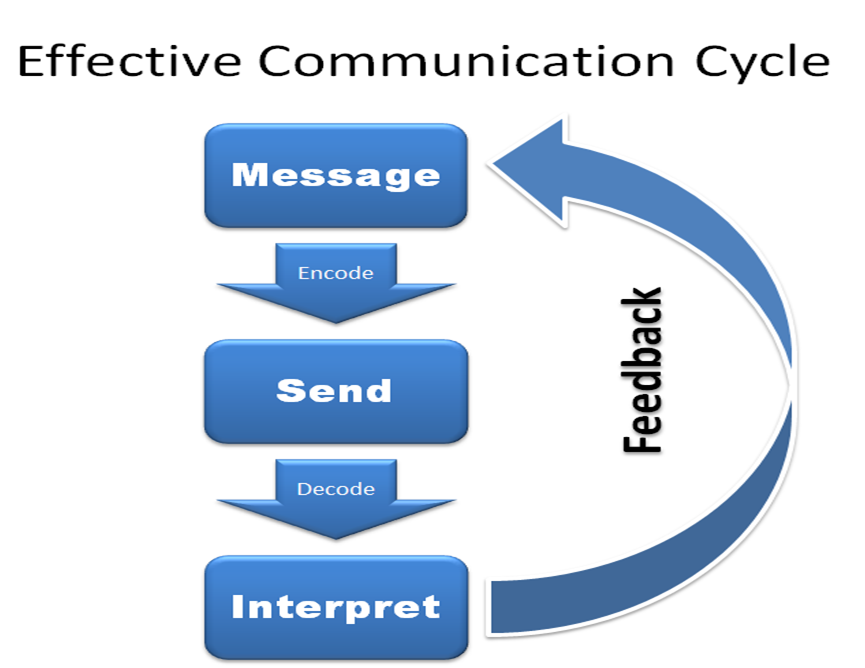
Encode- you must decide how you wish to send the message e.g. verbally, facial expression ECT...
Send-you must physically send the message
Decode- the other person must decode the message when they have received it
Interpret- the other person must make sense of the message
Feedback – you will receive feedback in one form or the other
If any step was to fails which it may do quite often it could lead to confusion or frustration. General communication skills
Communication processes need an audience to communicate the message to. The success of the message will be determined by:
Cultural differences
Adapting to suit an audience
Accuracy
Engaging the audience
Cultural differences
If there are any cultural differences between the speaker and there audiences it will need to be addressed in a delicate and careful manor. Some gestures or words which you consider to be harmless may come across as offensive or inappropriate in another language, to combat this you will need to stick to plain English without any slang words and you will need to make sure your gestures are not offending anyone. You may need to research to see if there is anything that should not be mentioned in to a particular group of people.
There are some things like age or composition of an audience which may affect the way you communicate with them. In some case you may need to rays your voice or vary the tone of your voice to help maintain interest. You may need to use terminology to relate to the audience to make sure that they understand. You might present your message in a particular format for example, music, rhyme ECT...
16
Interpersonal skills:
Communication consists of two or more people. Generally one person will express a message through words or in righting but this is not always the case there are some circumstances where you rely heavily on body language. The other person will use there senses to help them to understand what the other person is trying to say. These consist of things like:
Speed of response
Type of question
Barriers of communication
Active engagement
Positive communication
Negative language
Positive and negative language
It is important to portray a positive attitude when talking to people this can be done through the language you use or your body language. Nodding your head shows that you are listening and are taking in what is being said and agreeing with certain points are good ways of showing that your are listening. Negative language should be avoided as best possible because they are rude and show that you are not talking in what is being said. Negative language consists of things like disregarding what was said or not responding appropriately to questions or finishing people’s sentences. Body language can also have a negative effect, things like leaning on your hand or looking away show that you are not listening and should be avoided.
Active engagement
Communication consists of more thank just the spoken language; you can communicate to others while they are speaking. This is done by reacting to what is said by using gestures or facial expressions. Doing this shows that you have heard what they have said and understand it. Usually when someone has finished speaking they will be waiting for a response, they can show this by nodding in your direction or saying things like “right?” or “do you agree?”You can show that you understand that they want you to make a response by quickly summarizing it before moving on or you could give some examples to back up what was said. It is important to show that you understand what the other person wants or they may become confused or it can cause communication problems.

Communication in writing:
Writing communication is different than any other type of communication, it takes skills that not everyone has and it requires much more thought to be able to articulate your thought and feelings into words and then you need to but it into righting. It will also require grammar and vocabulary skills to get a message across that can be done very simply through verbal communication. Rthis will include things like:
Guide lines
Smiles or emoticons
Key messages
Grammar
Spelling
Structure
Grammar and spelling
Whatever the writing is going to be used for it is vital that the grammar and spelling are correct. Mistakes make the writer look Unprofessional and can make the reader confused or make the reader misunderstand the point of the writing. Most word processing software will have a spelling and grammar check to minimize mistakes.
Structure
You will need to structure your writing in a way that helps the reader understand what is being said. You will; need to organize your topics in a sensible order by adding heading, bullet points, and subheadings ECT… if the structure of the writing doesn’t make sense or is illogical the reader may have a hard time following and understanding what is being said.
Textbook page 15 – 18
Bibliography:
Books:
Anderson
Websites:

No comments:
Post a Comment